
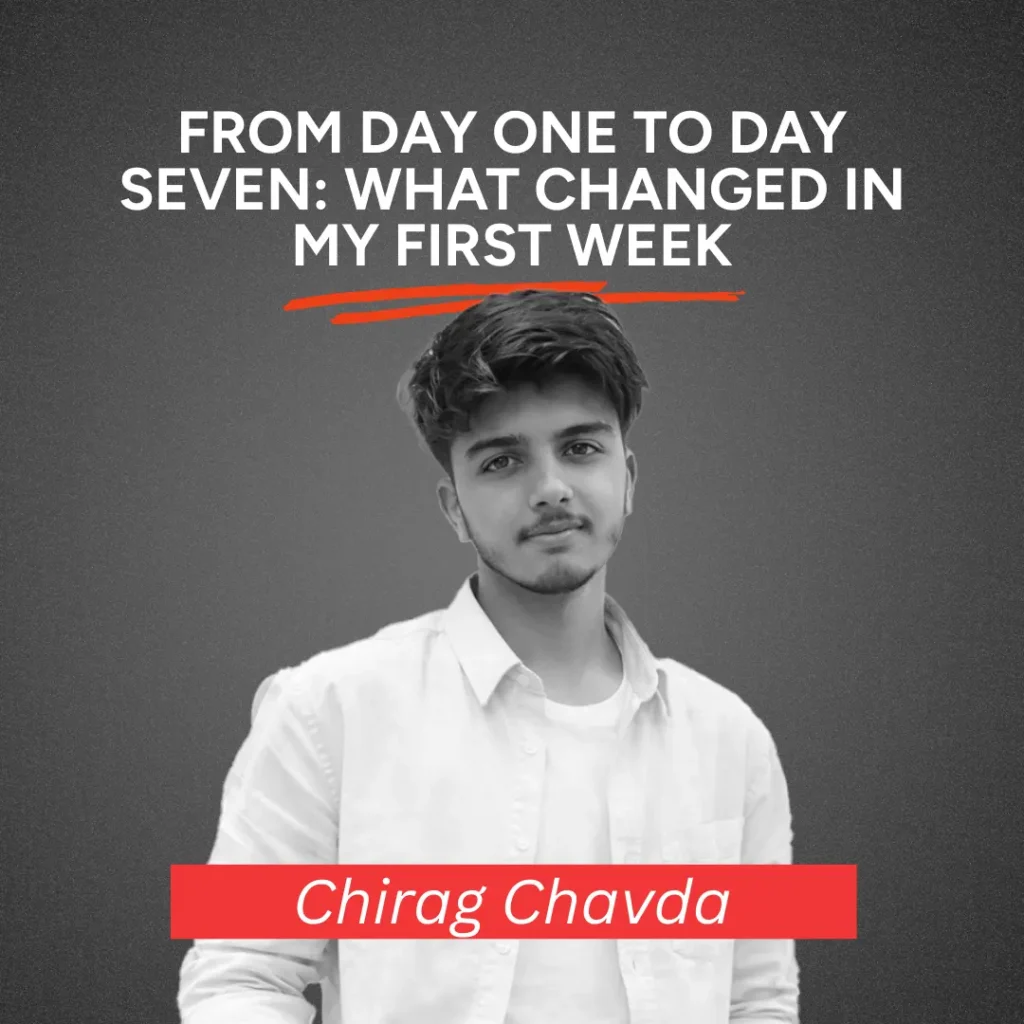
My name is Chirag, and a week ago, I walked into Kalvium not knowing what to expect.
I’d heard about the program. I’d read the materials. I’d talked to people. But until you’re actually there, sitting in the room, doing the work, you don’t really know what it’s going to feel like.
So here’s what changed between day one and day seven. Not the big promises or the glossy overview. Just what actually happened.
What I Expected vs What I Found
Before I started, I had this picture in my head of what college would be like. I thought it would be structured like school. Someone stands at the front. They explain concepts. You take notes. You memorize. You take a test. Repeat. I expected to feel like just another student in a room full of students. Anonymous. Quiet. Trying to keep up without drawing too much attention. And I thought making friends would take time. Weeks, maybe months. The kind of slow, awkward process where you eventually find your people.
That’s not what happened.
Day one felt different immediately. The environment wasn’t what I expected. There was no lecture hall with rows of desks. No professor talking at you for an hour straight. No sense of “sit quietly and absorb.”
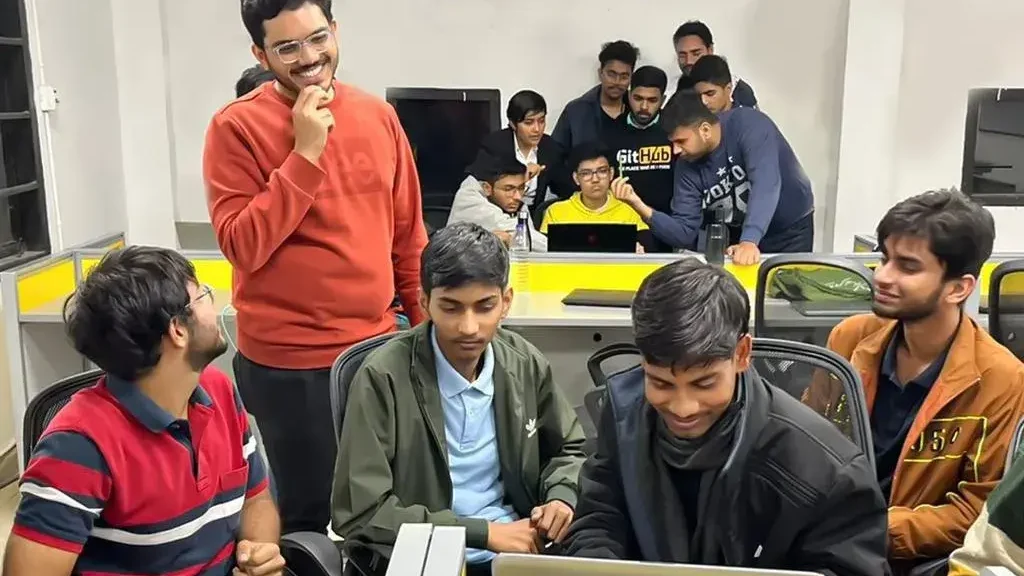
Instead, it felt active. The mentors asked questions. They waited for answers. They walked around, checking in with people individually. The room had energy, not passivity. And the structure wasn’t “here’s what we’re teaching you today.” It was “here’s what you’re going to learn, and here’s how we’re going to help you figure it out.” That shift, small as it sounds, changed everything.
Learning at Your Own Pace: What That Actually Means
One of the first things I heard about Kalvium was that learning was “self-paced.” I thought that meant “do it whenever you want, no pressure, take your time.” That’s not what it means. Self-paced doesn’t mean unstructured. Yes, you control the speed. Yes, you decide where to focus. But there are still deadlines. There are still expectations. You’re not just wandering through the material aimlessly.
The difference is this: you get to spend time where you actually need it. In school, if you didn’t understand something, too bad. The class moved on. The teacher had a schedule to keep. You either kept up or fell behind. At Kalvium, if you’re stuck on a concept, you can pause. You can reread the material. You can try different approaches. You can ask for help. And you don’t have to wait for everyone else to catch up or rush ahead before you’ve actually understood.
But here’s the hard part: you have to be honest with yourself. Self-paced learning only works if you’re willing to admit when you don’t understand something. If you pretend you’ve got it and move on, the gaps show up later. And they show up fast. I learned that the hard way.
On day two, I rushed through a section because I thought I understood it. I didn’t want to slow down. I didn’t want to look like I was struggling. Then I hit the assignment and realized I had no idea what I was doing. I had to go back. Reread. Ask questions. Take the time I should have taken the first time. It was frustrating. But it was also clarifying. Self-paced doesn’t mean easy. It means you’re responsible for your own learning. Once I accepted that, things got easier.
The materials actually made sense. The content is delivered through something called LiveBooks. At first, I thought they’d just be digital textbooks. But they’re not. They’re interactive. They include examples, exercises, explanations that build on each other. If you’re confused, you can go back and review earlier sections. If you’re clear, you can move ahead. And when you get stuck, the mentors are there. Not to give you the answer, but to ask the right questions so you can figure it out yourself. That’s the autonomy part. You get to experiment. You get to try things your way. But you also have to own the results.
By the end of the week, I’d figured out my rhythm. Where I needed to slow down. Where I could speed up. What questions to ask. How to actually learn instead of just completing tasks. That was one of the biggest shifts.
Why Class Discussions Actually Matter
On day one, we had a group discussion about a book called Who Moved My Cheese? I’ll be honest. When I first heard we were discussing a book, I thought it would be one of those awkward, forced conversations where no one really says anything and everyone just waits for it to be over. But it wasn’t like that.
The mentors asked real questions. Not “what’s the summary” or “what’s the moral of the story.” But things like: “How do you react when things change unexpectedly?” “What’s the difference between adapting and giving up?” “When was the last time you resisted change because it felt easier to stay where you were?” Those aren’t easy questions. They make you think. They make you reflect. And the mentors didn’t just ask and move on. They waited. They listened. They engaged with what people said.
The discussions weren’t about getting the “right” answer. That’s what made them different. In school, class discussions always felt performative. You raised your hand, said something smart sounding, and hoped the teacher agreed. If you said something “wrong,” you felt embarrassed. At Kalvium, there was no “wrong” answer. There were just different perspectives. When someone shared something, the mentors and other students built on it. They asked follow up questions. They connected it to their own experiences. It felt less like a classroom exercise and more like an actual conversation.
We talked about self-awareness too. Another discussion that stood out was about self-awareness. Understanding your strengths, your weaknesses, your patterns. Again, not a lecture. A conversation. People shared things they’d noticed about themselves. Habits they wanted to change. Situations where they reacted in ways they didn’t like. It was vulnerable. And because people were willing to be honest, the discussion felt real.
By the end of the week, I realized something: these discussions weren’t just filler. They were preparing us for something bigger. Learning to code is one thing. But learning to think critically, to reflect on yourself, to communicate clearly? That’s what actually matters when you’re trying to solve real problems. The discussions were teaching us how to do that.
Finding Your People When You Don’t Know Anyone
When I first arrived, I didn’t know anyone. I walked into the room, found a seat, and sat there quietly, waiting for things to start. I looked around at the other students, wondering who I’d end up talking to, who I’d connect with, whether I’d find people I actually liked. By the end of the week, that nervousness was gone.
Not because I’d become best friends with everyone, but because the environment made it easy to connect. The structure forced interaction. You couldn’t just sit alone and stay in your bubble. The way the program is set up, you have to collaborate. You have to ask questions. You have to help each other. When I got stuck on an assignment, I asked someone nearby for help. When someone else was confused, I explained what I’d figured out. Those small interactions added up. You start recognizing people. You start remembering who’s good at what. You start building trust.
Everyone had something they were good at. That’s one of the things that surprised me most. I met Aditya, who’s really into UI design. Just talking to him made me curious about it. I met Shreya, who loves badminton and kept encouraging people to play. I met people who were strong in coding, people who were great at explaining things, people who brought energy to the group. And here’s the thing: no one was competing with each other. In school, there was always this unspoken competition. Who got the highest marks. Who answered the most questions. Who the teacher liked best. At Kalvium, it didn’t feel like that. People helped each other. They shared what they knew. They celebrated when someone figured something out. That made it easier to show up as yourself.
By the end of the week, I felt like I belonged. Not because I’d found my “forever friends” or because I knew everyone perfectly. But because I felt comfortable. I felt like I could ask questions without being judged. I felt like I was part of something, not just observing from the outside. That sense of community built faster than I expected.
The House System: Competition That Doesn’t Feel Competitive
One of the unique things about Kalvium is the House system. The entire batch is divided into three Houses, kind of like in Harry Potter but without the magic. Each House has captains, and throughout the program, there are competitions and challenges. I was elected as one of the House captains.
Honestly? I didn’t expect to be chosen. But my batchmates voted, and somehow I ended up in that role. At first, I wasn’t sure what it meant. Was I supposed to lead? Organize? Motivate? I didn’t have a clear picture. But by the end of the first week, I’d been through two House challenges, and I started to understand what it was really about.
The competitions weren’t about winning. They were about learning to work together. The challenges weren’t typical competitions. They weren’t “who can solve this problem the fastest” or “who can score the highest.” Instead, they were creative. Team based. Designed to make you think differently and collaborate under pressure. One challenge involved solving a problem as a group within a time limit. Another required creativity and quick thinking. And here’s what made it different: everyone was invested, but no one was cutthroat. The other captains weren’t enemies. They were people I respected. We competed, yes. But it was friendly. Fun. The kind of competition that pushes you to do better without making you feel like you have to tear others down.
Being a captain taught me something unexpected. I thought being captain meant I had to have all the answers. That I had to be the best at everything. But that’s not what it meant. It meant listening to my team. It meant bringing people together. It meant creating an environment where everyone felt like they could contribute. And honestly? That was harder than I expected. But it was also more rewarding. By the end of the week, I was excited about what was coming next. More challenges. More opportunities to work with my House. More chances to grow into the role.
What One Week Taught Me About Myself
Looking back at the week, here’s what I learned. I’m more capable than I thought. I came in thinking I’d struggle to keep up. That I’d be confused most of the time. That I’d spend the week trying not to fall behind. But I kept up. I figured things out. I asked for help when I needed it and helped others when I could. That gave me confidence I didn’t have before.
I learn better when I have control over the process. Self-paced learning works for me. Not because it’s easier, but because it lets me focus where I need to. I don’t have to pretend I understand something when I don’t. I can take the time to actually learn it. That shift from “covering material” to “understanding material” made a huge difference.
I’m better with people than I gave myself credit for. I’m not the most outgoing person. I don’t walk into a room and immediately start talking to everyone. But at Kalvium, I didn’t have to be that person. I just had to show up, participate, and be willing to connect. And that was enough. By the end of the week, I had people I could talk to. People I could learn with. People I trusted.
One week is just the beginning. I’ve barely scratched the surface. There’s so much more to learn, so many more challenges ahead. But after one week, I feel like I understand what I’m working toward. I feel like I’m in the right place. And I’m excited about what comes next.
Ready to Experience Your Own Transformation?
Chirag’s first week at Kalvium changed how he sees himself, how he learns, and what he believes he’s capable of. What he’s described here isn’t marketing. It’s not polished. It’s just what actually happened when he walked in as a nervous student with doubts and walked out as someone who believed in himself.
If you’re reading this and thinking about whether Kalvium is right for you, I get it. You might be skeptical. You might be nervous. You might be wondering if this is real or just another program making big promises.
The only way to know is to experience it yourself.
If you want to learn more about the program, see what the application process looks like, or talk to someone about what your first week could look like, reach out to Kalvium. Visit the website, connect with the admissions team, or schedule a call with a mentor. They’ll answer your questions honestly. They won’t oversell. And they’ll help you figure out if this is the right fit for you.
Your transformation might start the same way Chirag’s did. Day one, nervous, unsure. But if you’re willing to show up, participate, and be honest about what you don’t understand, something changes. Fast.
Ready to take the first step? Connect with Kalvium today.
Visit: www.kalvium.com
Phone: +91 9483 200 300
FAQ
1. How does Kalvium’s hands-on learning experience compare to traditional universities?
Traditional universities often teach theory first for years, then add practical projects later. Kalvium flips this. You code and build from day one. The mentors work with you individually, not just lecturing to large classes. By the end of my first week, I’d learned more practical skills than I would in a semester of traditional lectures.
2. Is Kalvium suitable for beginners in technology and engineering?
Yes. Most students are beginners or have minimal experience. What matters is your willingness to learn and struggle through problems. The first week is designed so everyone starts on the same page regardless of background. I had basic coding knowledge coming in, and I kept up fine.
3. Can I get personalized mentoring through Kalvium?
Yes. Mentors guide you through questions rather than giving direct answers. They teach you how to think independently.
4. Can Kalvium’s programs help me build a portfolio of engineering projects?
Yes. You’re building real projects from day one. These become your portfolio. Companies care about what you can actually build, not just what degrees you have. By the end of the first week, I had projects that demonstrated real learning.
5. Are there opportunities to collaborate on projects with peers during Kalvium courses?
Yes. Collaboration is built into everything. You work with your cohort, share ideas, and help each other. The House system creates both competition and community. People aren’t trying to one-up each other. Everyone supports everyone else’s growth.
6. How is student progress tracked and reported throughout Kalvium’s programs?
Progress is tracked through completed assignments, projects, and self-paced completion of materials. You can see where you stand. But more importantly, you develop self-awareness. You learn to recognize what you understand and what you need to revisit. That’s the real tracking that matters.
7. What types of engineering disciplines are covered in Kalvium’s training programs?
Kalvium covers computer science and engineering disciplines with hands-on focus. The emphasis is on problem-solving, coding, and building real projects. The specific disciplines and technologies evolve, but the core is practical engineering and computer science.
8. What does self-paced learning actually feel like?
It feels freeing, but also challenging. You have control over where you spend your time, but that means you’re responsible for making sure you actually understand things. If you rush through, it shows up later. If you take it seriously, it works really well.
9. Are the group discussions awkward?
Not really. They felt a little strange at first because they’re different from what you’re used to. But the mentors create an environment where it’s safe to share, so people actually participate. It feels more like a real conversation than a forced classroom exercise.
10. What if I don’t know anyone when I start?
Neither did anyone. But the way the program is structured, you end up interacting with people naturally. You work together, ask questions, help each other. By the end of the first week, you’ll know people. It happens faster than you think.
11. What’s the House system actually like?
It’s fun. The competitions are creative and team based, not stressful or cutthroat. It gives you a sense of belonging and a reason to work together with people outside your immediate friend group.
12. Is the first week overwhelming?
It’s a lot. There’s new information, new people, a new way of learning. But it’s not overwhelming in a bad way. It’s manageable, and the mentors make sure you’re supported. By the end of the week, you’ll have adjusted more than you expect.