
Most engineering graduates do not fail because they did not study hard enough.
They fail the transition.
Four years of lectures, exams, and concepts that made complete sense inside a classroom. Then the first real engineering problem arrives, and something shifts. The student who could explain every concept clearly cannot make a decision under actual constraints. Cannot hold a design together when no textbook has the answer. Cannot debug something they have never actually built before.
Understanding a concept and being able to act on it are not the same skill. Most colleges teach the first and assume the second follows. It does not.
That is precisely the gap Kalvium was built to close. And it is the reason students at Kalvium enter the professional world differently.
Take databases. A student who has studied normalisation thoroughly can explain it, pass exams on it, and describe the theory precisely. Ask that same student to design a database for an e-commerce platform with real traffic patterns and query performance requirements, and they will often freeze. Not because they do not know the concept. Because they have never had to make the decision.
Students at Kalvium have made that decision. Multiple times. Under real conditions. That is the difference this blog is about.
Why The Theory-First Approach Doesn’t Work
Most four-year engineering programs are built on a reasonable assumption: learn the theory first, then apply it. The problem is that the application rarely arrives in time, or in a form that builds real capability.
Year 1 and 2 are dedicated to academics: data structures, algorithms, databases, networks. You study, you understand, you pass. The concepts make sense in the controlled environment of a classroom.
Year 3 is when projects arrive. But by now you have spent two years in lecture mode. Projects feel like a separate exercise, applying theory that has already become abstract. The connection between learning and building never forms naturally.
Year 4 brings a capstone project alongside final exams, placement preparation, and interviews. The project becomes something to complete, not something to care about.
By graduation, you have spent roughly four years studying concepts and a few months actually building. That ratio is the problem.
When you step into a professional engineering environment, there is no warm-up period. No theory phase before you are handed a real problem. You are given a codebase, a deadline, and a single expectation: contribute. The assumption is that you already know how to build, not just understand.
If most of your four years went toward understanding rather than building, that assumption will surface the gap quickly. Students at Kalvium are not in that position. Because at Kalvium, the four years are structured differently from the very first month.
What Building From Day One Actually Looks Like
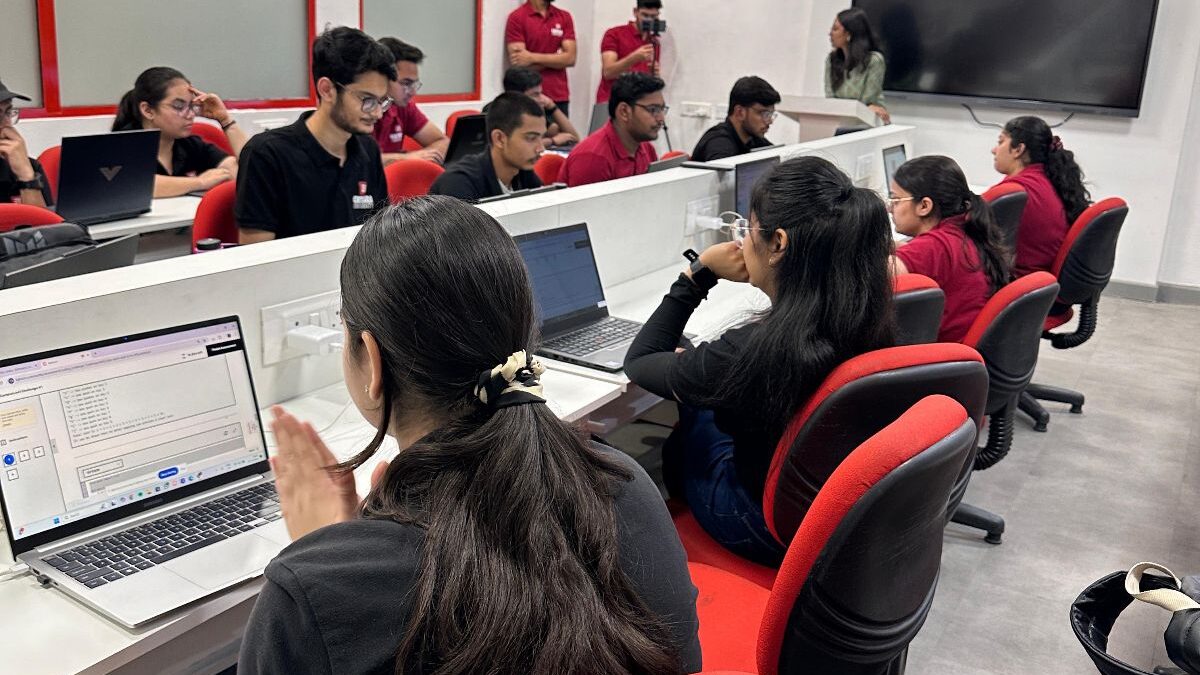
Month 1, Year 1: students at Kalvium are building a full-stack application. Not a tutorial. Not a step-by-step walkthrough. A real frontend with HTML, CSS, and JavaScript. A real backend with Node.js. A real database. Real decisions that need to be made.
The approach is not to front-load theory and apply it later. At Kalvium, students encounter a concept because the project needs it. You learn about HTTP because your backend has to handle requests. You learn about database indexing because your queries are too slow. Theory enters when it is immediately relevant, and it sticks differently when it does.
By Month 3, students at Kalvium have built multiple working applications: e-commerce systems, task management platforms, social applications. These are not projects designed to demonstrate what has been learned. They are projects that forced learning because they had to be made to work.
That distinction matters more than it might seem.
Students here have debugged real failures. Made architecture decisions with real tradeoffs. Shipped code that actually runs. That is not the same as understanding how all of those things work in theory. It is a different kind of knowledge, practical and earned, and far harder to fake.
By the end of Year 1, students at Kalvium have already been building for months. The understanding that forms through that practice compounds with every subsequent semester.
The Difference This Makes
There is a version of a CS graduate who can explain how databases work. They can walk through joins, normalisation, indexing. They have studied it carefully and know it well.
There is a student at Kalvium who has designed databases: made schema decisions, dealt with slow queries under real load, and learned what breaks under pressure and why.
Both might say they understand databases. But in a technical interview, inside an actual codebase, during the first week of a real role, the difference surfaces quickly. One person is recalling knowledge. The other is drawing on experience.
That is what four years at Kalvium is structured to develop: not just a graduate with knowledge, but a student with judgment.
The debugging instinct. The ability to make a call when no answer is written down. The confidence to own a problem rather than wait for someone to define it more clearly. These do not come from courses. They come from repeated practice under real conditions, over time.
When a student graduates from Kalvium, they are not hoping they can build. They know they can. They have done it dozens of times, across hundreds of real decisions, over four years. That confidence is not manufactured. It is accurate.
The Mentorship Part Matters Too
Building on your own has limits.
You can get unstuck by searching online. You can use AI to debug. You can find a working solution eventually. But you will often not know whether the solution you found is the right one, or simply one that runs.
Students at Kalvium do not build alone. Mentors at Kalvium have industry experience and bring that perspective into every interaction. When a student is stuck, the mentor does not hand over the answer. They help think it through: what are you trying to achieve, what constraints are you working within, and what are the tradeoffs here.
The student arrives at the decision. The mentor guides the thinking, not the outcome.
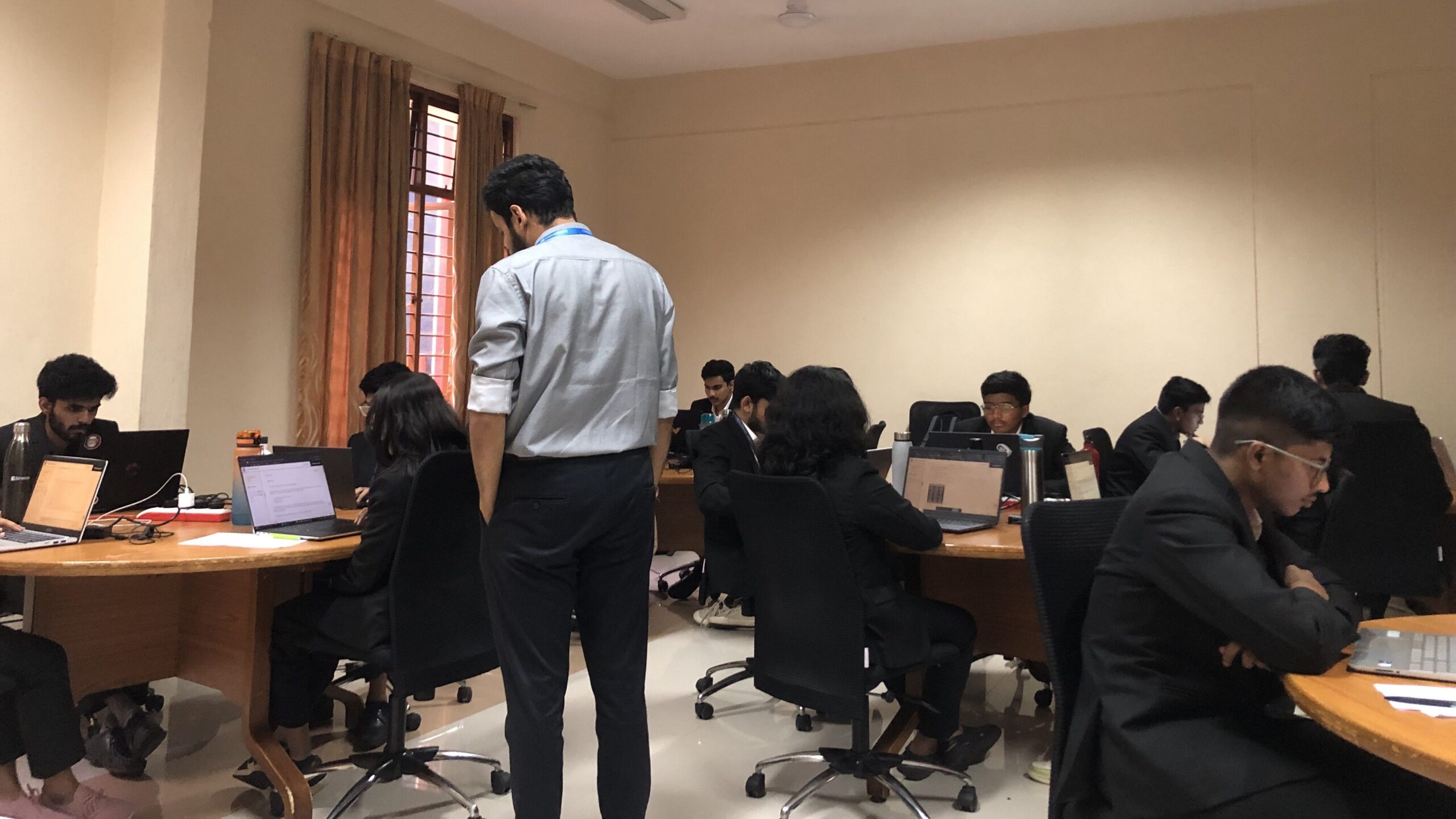
Over time, that dynamic teaches something that a textbook cannot: how to reason through a problem you have never seen before. Not just what the answer is, but how to approach finding it. That is a different kind of learning, and it requires a different kind of teacher.
Mentors also review code and the decisions behind it. The feedback is not correction for its own sake. It is context: why one approach holds up better than another at scale, where the reasoning is solid, and where gaps exist that the student has not yet seen. That feedback loop, sustained across four years, is a significant part of what shapes a Kalvium student into an engineer who thinks, not just one who codes.
What This Means For Your Future
When companies bring in a fresh graduate, the expectation is straightforward: contribute without months of remedial onboarding. The assumption is that four years of engineering education produced someone ready to work with real systems.
Students from Kalvium meet that expectation. Full-stack systems built. Architecture decisions worked through. Real pressure debugged under. The experience of owning something and seeing it through already exists before graduation.
A Kalvium student does not join a company at zero. They join ready.
For a graduate from a theory-heavy program, the first year is often an adjustment period: building things they were never required to build in college, developing instincts that confident engineers already have. That adjustment has a cost. It affects what you are trusted with early, how quickly you grow, and how you are perceived during a period that matters more than most people realise.
The gap between holding a degree and being genuinely ready to practise engineering is real, and it is measurable. Kalvium is structured to close it across the four years, not leave it as someone else’s problem on the other side of graduation.
Here’s What Matters
Most engineering programs produce graduates who understand computer science.
Kalvium produces students who can build with it.
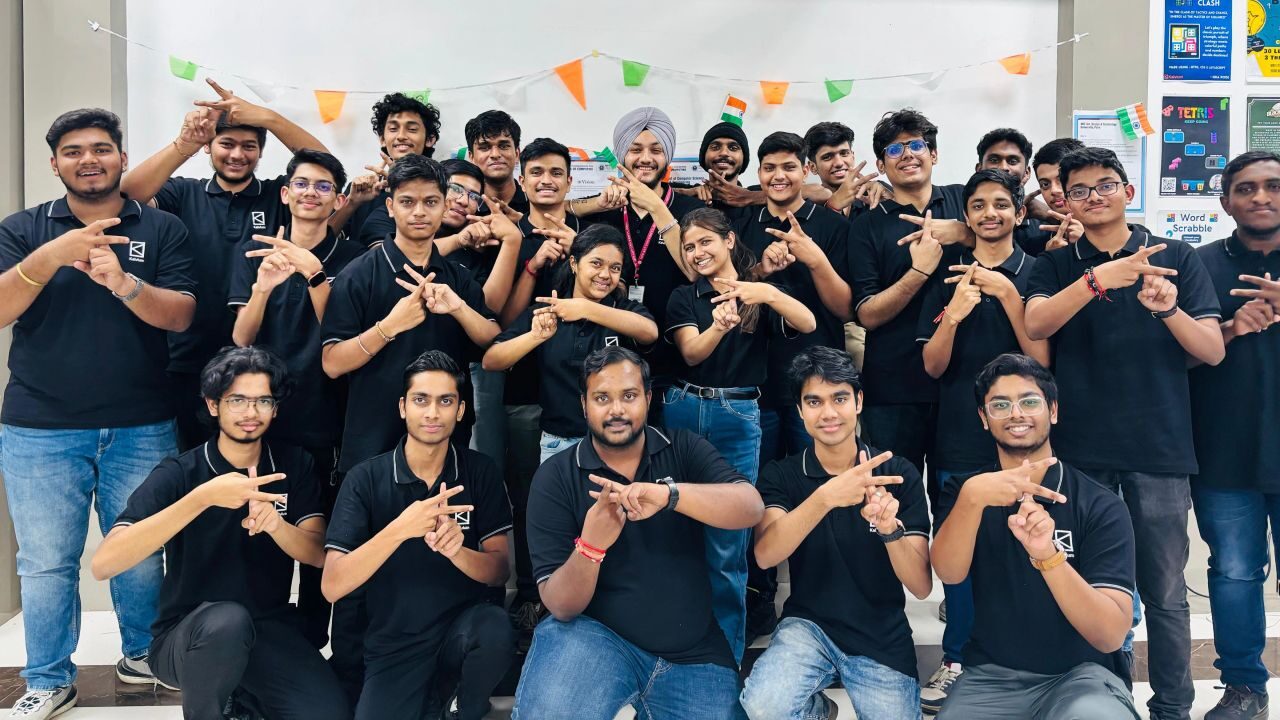
That is not a small distinction. It is the difference between someone who studied the field and someone who has been practising it for four years.
By the time a Kalvium student graduates, there is a portfolio of real work: systems designed, codebases owned, decisions made and defended. The four years are not a preparation for engineering. They are four years of engineering.
That is not just a degree. That is what four years at Kalvium produces.
If that is the kind of engineer you want to become, it is worth seeing what the program looks like from the inside.
Talk to our Academic Counselors. To know more about Kalvium.
Call Kalvium: +91 9483 200 300
FAQs
Q: What exactly does Kalvium offer, and how is it different from a regular B.Tech?
A: Kalvium offers a fully recognised B.Tech CSE degree in partnership with established universities. What is different is how the four years are spent. Most programs defer real practice until the later years. At Kalvium, a student begins building from Month 1, learning concepts as their projects require them rather than in isolation. Mentors bring industry experience into how they guide students, focusing on individual growth rather than syllabus coverage. By graduation, a student holds both a degree and a body of real work. One certifies the education. The other demonstrates the capability.
Q: Will I genuinely build a portfolio at Kalvium?
A: By the end of Year 1, students at Kalvium have built multiple working applications with real frontends, backends, and databases. These are not simulation exercises or guided walkthroughs. They are systems that required genuine decision-making and independent problem-solving.
Q: When does the building actually begin?
A: From the very first month of Year 1. There is no extended theory phase before practice begins. Students here encounter concepts when a project makes them necessary, which means the learning lands with immediate context and purpose. Theory and building are not treated as separate stages. They are woven together from the start, because that is closer to how engineering actually works in practice.
Q: If I am building from day one, will I miss out on the foundational theory?
A: Not at all. The foundational theory is covered thoroughly, but it arrives in a different order. When code is running slowly, data structures and time complexity become relevant in a way that a lecture alone rarely achieves. When a system breaks under load, system design stops being abstract. When queries become inefficient, indexing and optimisation are no longer just exam topics. Theory learned while facing the actual problem it addresses tends to form deeper, more durable understanding. Students at Kalvium learn the foundations. They simply learn them in a sequence that makes sense.
Q: Is the work at Kalvium genuinely challenging?
A: Yes, and that is by design. Students are not handed a walkthrough to follow. Problems are real, and the path forward has to be found. Mentors support the thinking process. This approach is harder, but it is the only way to develop the kind of engineering judgment that holds up in real conditions. The difficulty is not incidental. It is the point.
Q: Are the projects real, or are they structured exercises dressed up to look real?
A: They are real. Students at Kalvium build systems that function, handle actual use cases, and required the student to make real architectural decisions along the way. There is no script to follow. The choices made in those projects, including the ones that did not work out as planned, are part of what makes the portfolio honest. When a student discusses their work in a professional setting, they can speak to every decision in it because they were the one who made it.
Q: How is Kalvium’s approach meaningfully different from other engineering colleges?
A: Most engineering programs are built on a clear sequence: theory for the first two years, followed by projects closer to graduation. The intention is sound, but the gap between learning and applying tends to widen over time rather than close. At Kalvium, that sequence is replaced with integration. Building and learning happen together from the start. Mentors bring industry experience into how they engage with students, focusing on reasoning and growth rather than content delivery alone. The four years are structured around developing a student who is genuinely ready to contribute, not one who will spend the first year after graduation catching up on what college did not provide.