
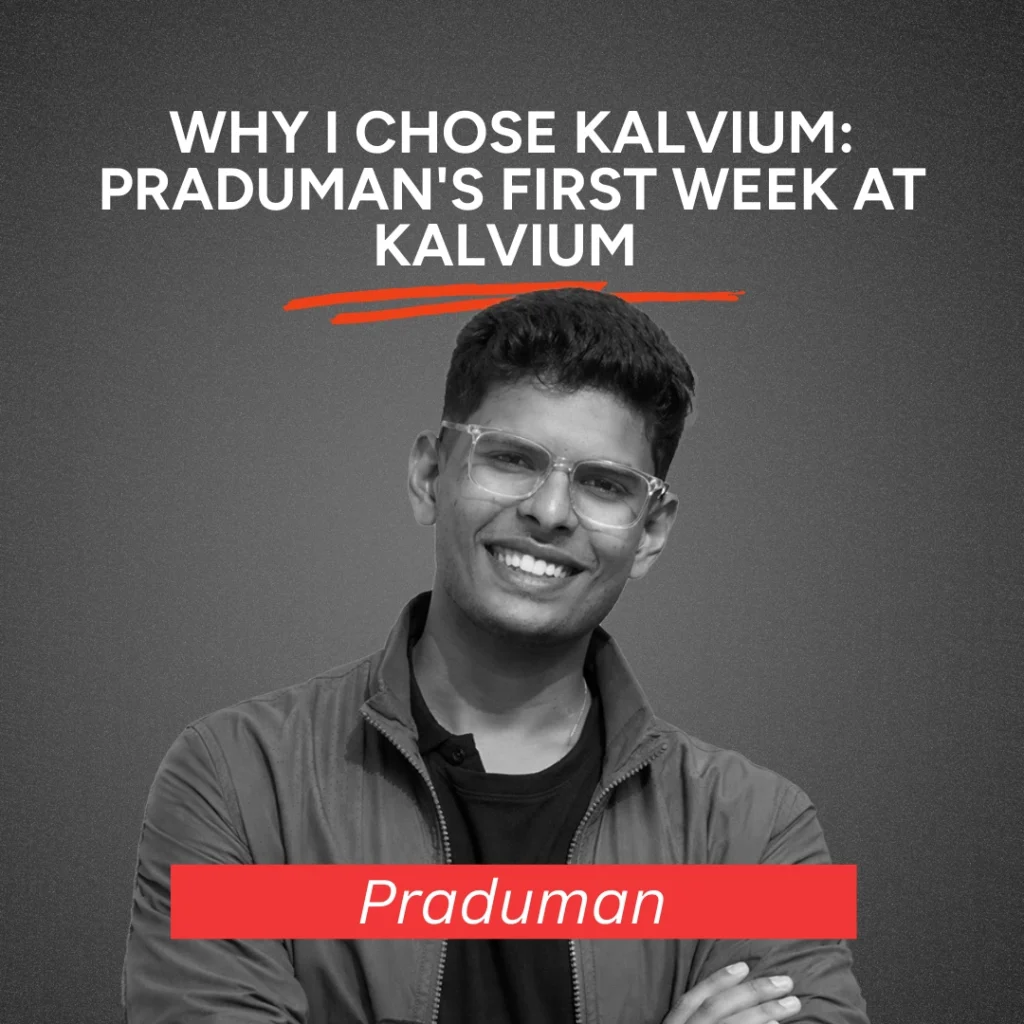
My name is Praduman, and this is what my first week at Kalvium actually felt like.
I’m not going to pretend it was all smooth or that I had everything figured out from day one. I didn’t. I was nervous, out of my comfort zone, and honestly not sure what I had signed up for.
But I’m writing this because if you’re trying to figure out whether Kalvium is right for you, you deserve to hear what it’s actually like. Not the polished version. The real one.
So here it is.
The Question That Led Me to Kalvium: Beyond Rankings and Promises
I come from a middle-class family. The kind where education matters, where you’re expected to do well, and where every decision about college feels like it carries weight.
Like most students in 12th grade, I spent months researching colleges. I looked at rankings, placement statistics, campus photos, and course structures. I asked seniors. I watched YouTube videos. I read reviews.
And honestly? Most colleges started to look the same after a while.
Everyone promised “industry-ready skills.” Everyone claimed “experienced faculty.” Everyone had glossy brochures with smiling students and modern labs.
But I kept coming back to one question: What will I actually be able to do after four years?
Not what degree will I have. Not what my resume will say. But what will I actually know how to build? What problems will I be able to solve?
That’s when I came across Kalvium.
At first, I was skeptical. It sounded different, and different can be risky. But the more I read, the more it made sense.
Here’s what stood out to me:
They didn’t hide the difficulty. Most colleges talk about how easy everything will be, how supportive the environment is, how you’ll “thrive effortlessly.” Kalvium was upfront about the work. They said it would be hard. They said you’d have to push yourself. That honesty felt rare.
The learning model was hands-on from day one. Not “we’ll teach you theory for two years and then maybe you’ll do a project.” But actual coding, actual building, actual problem-solving starting immediately.
I wasn’t looking for the easiest path. I was looking for the one that would actually prepare me. And Kalvium felt like that place.
So I decided to apply.
The KNET Challenges: How a Real Assessment Tested My Thinking
To get into Kalvium, you have to clear something called the KNET Challenges.
I’ll be honest, when I first heard about it, I thought it would be another entrance exam. Multiple-choice questions. Memorize formulas. Regurgitate answers. The usual.
But it wasn’t like that at all.
The KNET Challenges were different. They didn’t ask me to recall facts or solve textbook problems. They asked me to think, create, and solve problems in real time.
There were challenges that tested my time management. Others that tested creativity. And then there was coding, but not the “write the syntax for a for-loop” kind of coding. It was problem-solving through code.
The one that stood out to me the most was the Draw the Turtle Challenge.
You had to draw shapes and patterns using only commands. No visual interface. No drag-and-drop. Just logic and code.
It sounds simple, but it’s not. You have to think spatially, break down the problem, and translate your mental image into precise instructions. It was frustrating at times, but also weirdly fun. I’d never done anything like it before.
What made it different from other tests I’d taken was this: I actually wanted to finish it. Not because I had to, but because I was curious to see if I could solve it.
After I submitted all the challenges, I waited. A few days later, I got a call.
The mentor on the other end told me I’d done well. Really well, actually. I was in the top 3% of applicants who cleared the challenges.
I’m not going to lie, that felt good. Not because of the percentage, but because it validated something I’d been wondering about myself: Could I actually do this? Could I handle a program like Kalvium?
The KNET results didn’t just get me into the program. They gave me confidence that maybe, just maybe, I could keep up.
What I Thought Would Happen vs. What Actually Did
Before I joined, I had this picture in my head of what the first week would be like.
I expected long, exhausting days. Back to back lectures. Assignments piling up. Barely any time to breathe.
I thought it would be intense in the “this is going to break me” kind of way.
But when I actually got there? It was intense, yes. But not in the way I expected.
Day One: The First Surprise
I arrived at LPU for the induction, nervous and a little overwhelmed. I didn’t know anyone. I wasn’t sure what to expect. And I was already wondering if I’d made the right choice.
The first thing that surprised me was the schedule.
It wasn’t brutal. It wasn’t designed to burn you out. It was structured in a way that actually made sense. There were live classes, yes. But there was also self-paced learning time. Breaks. Space to process what you’d learned.
I’d expected the mentors to throw everything at us at once. Instead, they paced it. They let us absorb things. They checked in to see if we were keeping up.
That doesn’t mean it was easy. It just means it was designed for learning, not just surviving.
Meeting Anil: When “Sir” Became Just a Name
The second thing that surprised me was the mentors themselves.
In school, teachers always felt distant. You called them “sir” or “ma’am.” You raised your hand to speak. You waited for permission.
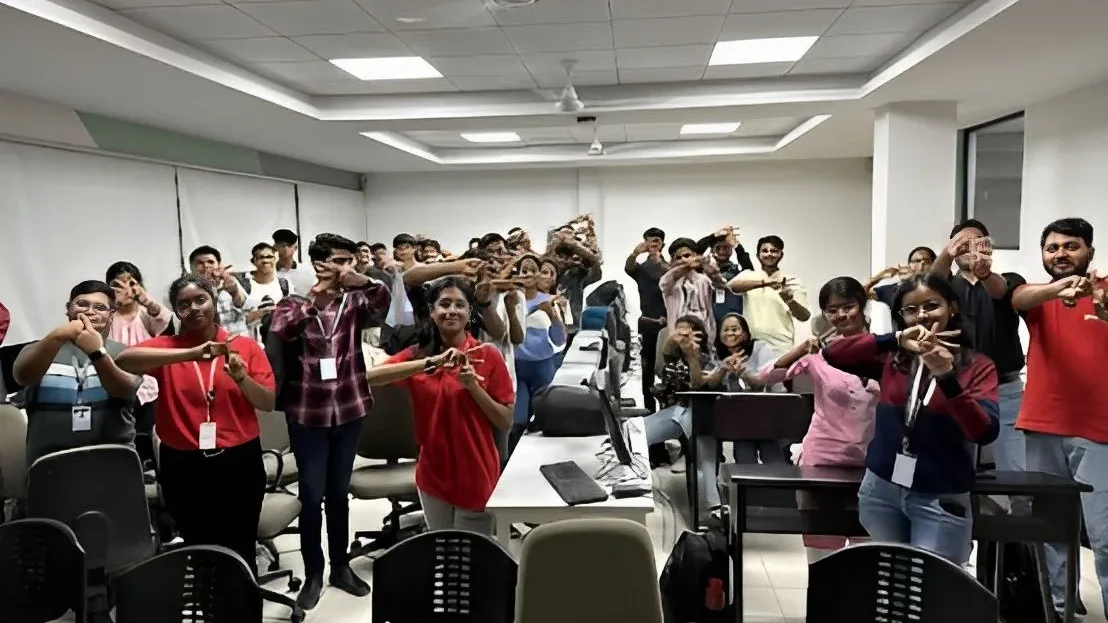
At Kalvium? None of that.
On the first day, one of the mentors introduced himself. Let’s say his name was Anil. I instinctively said, “Nice to meet you, Anil sir.”
He smiled and said, “Just Anil.”
It felt weird at first. Like I was being disrespectful. But he explained why.
Respect doesn’t come from titles. It comes from how you show up, how you work, how you treat people. In the real world, you don’t call your teammates “sir” or “ma’am.” You work together as equals.
That shift in mindset, small as it sounds, changed how I interacted with everyone. I stopped waiting for permission to ask questions. I stopped feeling like I needed to be perfect before speaking up.
I just showed up and participated.
How Coding Taught Me to Find My Voice
Let me be honest about something: I was not confident at all when I started.
I’d done a little bit of coding before Kalvium. Basic stuff. But I didn’t really know anything. And more than that, I was shy. I avoided speaking in English. I stayed quiet in groups. I never felt like I had anything valuable to contribute.
The first few days at Kalvium were uncomfortable for exactly that reason.
The Approach That Changed How I Learn
The way Kalvium teaches is different from anything I’d experienced before.
It’s not “sit quietly, take notes, memorize this for the exam.” It’s active. You’re coding from day one. You’re solving problems, building things, figuring stuff out.
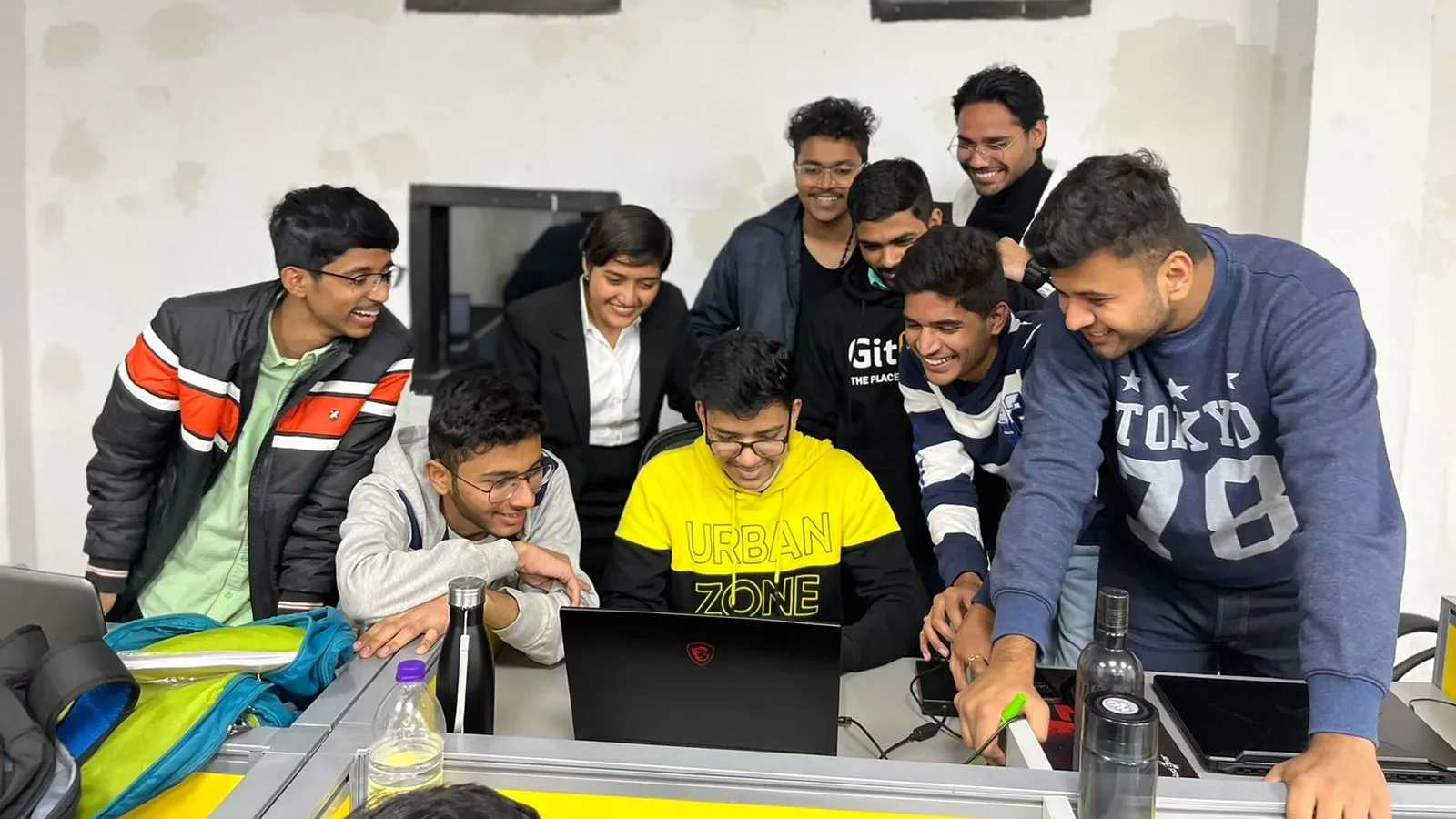
The mentors give you resources. Really clear explanations, examples, code snippets. But they don’t do the work for you.
If you’re stuck, they’ll ask you questions. “What have you tried so far?” “What do you think is causing the issue?” “How would you approach this differently?”
At first, that frustrated me. I just wanted the answer. I wanted someone to tell me what to do.
But slowly, I realized something: they weren’t withholding help. They were teaching me how to think.
By the end of the first week, I’d learned more about front-end web development than I’d learned in months of watching YouTube tutorials. Not because the content was harder, but because I was actively doing it, struggling with it, and figuring it out.
From Shy to Speaking: A Quiet Shift That Mattered
The coding progress was visible. I could see the projects I was building, the problems I was solving.
But the other change, the one I didn’t expect, was harder to measure.
I started speaking up in class.
Not because I suddenly became confident overnight, but because the environment made it safe to try. The mentors asked questions and waited for answers. They didn’t judge wrong guesses. They encouraged attempts, even messy ones.
My classmates were the same way. No one was trying to one-up each other. Everyone was just trying to learn.
And slowly, I stopped worrying so much about sounding perfect. I stopped avoiding English. I started asking questions, sharing ideas, participating.
By the end of the week, I was still far from being the most confident person in the room. But I was no longer the person hiding in the back, hoping no one would call on me.
That shift mattered more than I realized at the time.
Four Lessons I Didn’t Expect to Learn in One Week
Looking back, the first week at Kalvium taught me a few things I didn’t expect to learn.
One: I was more capable than I thought.
I’d spent so much time doubting myself, wondering if I was good enough, worrying about whether I’d be able to keep up. But when I was actually in the middle of it, doing the work, solving the problems, I realized I could handle it.
Not perfectly. Not without struggle. But I could do it.
Two: Learning is supposed to be uncomfortable.
I used to think that if something felt hard, it meant I wasn’t cut out for it. But the first week showed me that discomfort is part of the process. If everything feels easy, you’re probably not learning much.
Three: The people around you matter.
The mentors at Kalvium weren’t just there to teach. They were there to guide, support, and push you when you needed it. And my classmates? They became the people I could lean on, learn from, and grow with.
That sense of community, that feeling of “we’re all figuring this out together,” made the hard parts easier.
Four: I made the right choice.
I won’t pretend everything was perfect. There were moments of frustration, confusion, exhaustion. But by the end of the first week, I felt something I hadn’t felt in a long time: clarity.
I knew what I was working toward. I knew what was expected of me. And I knew I was in a place that would actually help me become the kind of person I wanted to be.
Not just someone with a degree, but someone who could build things, solve problems, and show up confidently in the real world.
FAQ
1. Is Kalvium suitable for beginners in technology and engineering?
Yes. Kalvium doesn’t expect you to be an expert. Most students are beginners. What matters is your willingness to learn and struggle through problems. The first week gets everyone on the same page regardless of starting level.
2. Can I get personalized mentoring through Kalvium?
Yes. Mentors guide you through questions rather than giving direct answers. They teach you how to think independently. Since mentors have real industry experience, they focus on skills that actually matter in the real world.
3. How does Kalvium’s hands-on learning experience compare to traditional universities?
Traditional colleges teach theory first, then projects later. Kalvium flips this. You code and build from day one. The schedule includes live classes, self-paced learning, and breaks. It’s designed for actual learning, not just surviving.
4. Does Kalvium provide resources for preparing technical interviews?
Not directly in week one, but the teaching approach prepares you. You constantly explain your thinking, justify your code, and solve problems. You build a portfolio of real projects. These are what companies actually care about in interviews.
5. Are there opportunities to collaborate on projects with peers during Kalvium courses?
Yes. Collaboration is built in. You work with your cohort, share ideas, and help each other. No one tries to one-up each other. That community makes the hard parts easier.
6. What career benefits can I expect from completing Kalvium’s programs?
You develop the ability to build, solve real problems, and think independently. You work with mentors who understand what the industry needs. You build a portfolio that shows what you can do, not just what degrees you have.
7. What if I don’t have much coding experience before joining?
Most students don’t. Kalvium doesn’t expect expertise. They expect willingness to learn and figure things out. The first week levels everyone up regardless of background.
8. Is the first week overwhelming?
It’s intense, but not in a bad way. The schedule has breaks, self-paced time, and space to process. You’ll work hard without feeling like you’re drowning.
9. How do I know if I’ll fit in with the other students?
Everyone is in the same boat. Everyone is nervous and adjusting. That shared experience builds connection naturally and quickly.
10. What if I’m shy or not confident speaking in English?
The environment is designed to make it safe to try and mess up. Mentors and classmates are supportive, not judgmental. You build confidence bit by bit.
11. Do I need to decide everything about my future before joining?
No. Just be curious and willing to work hard. Everything else becomes clearer as you go.