
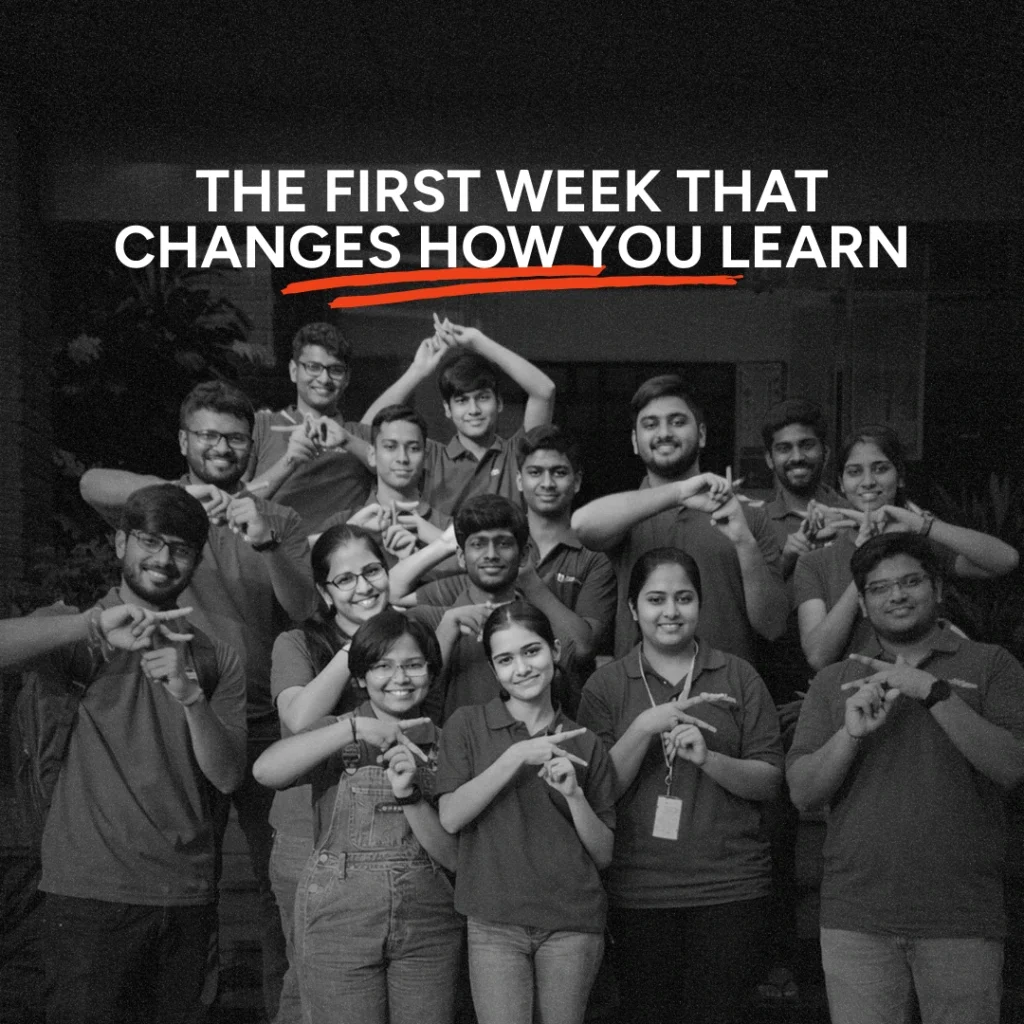
Your first week at Kalvium isn’t like most college orientations.
There’s no auditorium full of students half-listening to long speeches about rules and syllabi. No awkward forced group activities where everyone stares at their phones. And definitely no “welcome to the best four years of your life” kind of hype.
Instead, you’ll probably get lost on campus. You’ll have uncomfortable conversations about peer pressure and risk-taking. You’ll be asked to stop calling people “sir” and “ma’am.” And if you’re late to class, you might have to do something challenging in front of everyone.
It sounds intense, and honestly, it is. But here’s why it matters.
Most college orientations prepare you to attend college. Kalvium’s first week prepares you to become someone different. Someone who learns differently, thinks differently, and shows up differently.
This isn’t about fitting into a system. It’s about understanding what kind of learner you’re choosing to become, and whether you’re ready for that.
Here’s what actually happens during that first week, and what it tells you about the next four years.
When a 600-Acre Campus Teaches You More Than Navigation
Let’s start with the most relatable part: getting completely lost.
Lovely Professional University’s campus is 600 acres. That’s massive. On your first day, you’ll walk from one building to another, take a wrong turn, ask for directions, walk some more, and probably still end up at the wrong block.
It’s frustrating. It’s tiring. And it’s also kind of the point.
Here’s the thing. Kalvium students spend a lot of time in front of screens. Writing code, debugging projects, learning frameworks. It’s mentally exhausting work. So those long walks between buildings? They’re not a bug. They’re a feature.
You’ll get your steps in. You’ll figure out shortcuts. And by week two, you’ll know the campus better than most seniors.
But more importantly, you’ll learn something that applies to everything at Kalvium: getting lost is part of the process. You won’t always know where you’re going. You won’t always have clear instructions. And that’s okay, because figuring it out is how you grow.
The Kalvium team? They got lost on campus too during their first few visits. So if you’re confused on day one, you’re in good company.
What Orientation Actually Discusses (And Why It Matters)
Most orientations talk to you. Kalvium’s orientation talks with you, about things that actually matter.
These aren’t ice-breakers for the sake of ice-breakers. These are conversations designed to shift how you see yourself, your learning, and the people around you. Some of them are uncomfortable. Some of them are funny. All of them are necessary.
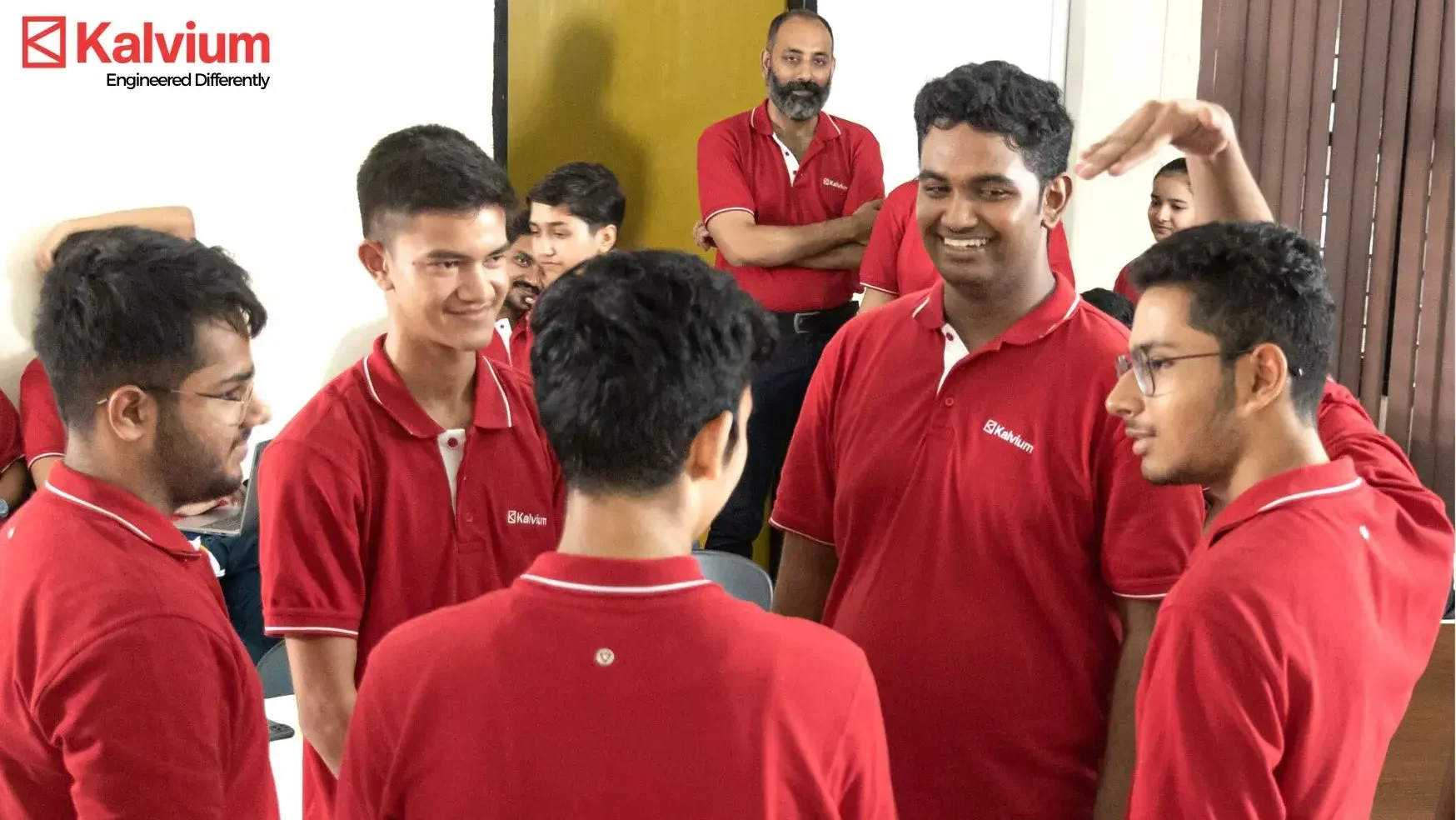
Here’s what gets discussed, and why.
First Names Only: Building Respect Through Equality, Not Hierarchy
This adjustment catches people off guard initially.
You’ve spent years in school calling teachers “sir” and “ma’am.” It’s polite. It’s respectful. It’s what you’ve been trained to do.
But at Kalvium, you call everyone by their first name. Professors, mentors, peers. Everyone.
Why? Because respect doesn’t come from titles. It comes from your work and how you show up.
In the real world, the one you’re preparing for, you don’t call your manager “sir” in a standup meeting. You don’t send an email to your teammate addressing them as “ma’am.” You collaborate as equals, even if you’re at different experience levels.
That’s the culture Kalvium is building. A culture where you’re not a student asking permission. You’re a learner contributing value.
So when someone introduces themselves as Anil, and you instinctively say “Anil sir,” they’ll correct you with a smile: “Just Anil.”
It feels weird at first. But after a few days, it clicks. And once it does, you start showing up differently. More confident, more equal, more ready.
Guidance, Not Answers: What Independent Learning Actually Looks Like
Here’s a phrase you’ll hear a lot during orientation: “We don’t spoon-feed.”
And here’s what students usually think when they hear it: “Wait, does that mean I won’t get help?”
No. It means you’ll get guidance, not answers.
There’s a difference.
Spoon-feeding is when someone does your work for you. Guidance is when someone helps you figure out how to do it yourself. The first one makes you dependent. The second one makes you capable.
Let’s say you’ve mastered a concept in class. Great. Now can you apply it to a real-world project? Can you explain it to someone else? Can you lead a team using that knowledge?
That’s the standard. Not “did you finish the assignment,” but “can you actually use what you learned?”
If you’re looking for a place where you can coast through, copying code, submitting half-done projects, relying on others to pull you through, Kalvium isn’t it.
But if you’re the kind of person who wants to actually know what you’re doing, who wants to build things that work and solve real problems, then this approach will push you further than you thought you could go.
Why Engineering Needs Spaces Where Everyone Thrives
This is one of the harder conversations, but it’s one of the most important.
In engineering and computer science, the ratio of girls to boys has always been low. That’s not new information. But what is new, for many students, is understanding why that matters and what needs to change.
Equality means giving everyone the same opportunities. Equity means giving everyone what they need to access those opportunities.
Sometimes that looks different. Sometimes the minority needs different support structures, not because they’re less capable, but because the environment hasn’t been built for them.
At Kalvium, the goal is simple: create a learning space where boys and girls both thrive. Where respect isn’t conditional. Where teamwork doesn’t exclude anyone. Where everyone has what they need to succeed, not just survive.
This isn’t about being “woke” or checking boxes. It’s about building a better engineering culture from the ground up. One that respects people’s situations, supports their growth, and doesn’t tolerate disrespect or shortcuts.
Healthy competition comes from understanding your own strengths and respecting others’ challenges. That’s the kind of environment Kalvium is building, and orientation is where that conversation begins.
How Kalvium Trains You to Take Calculated Risks
During orientation, students share stories about risks they’ve taken. Good ones and bad ones.
Some are funny. “I didn’t study for my JEE exam until the night before.”
Some are sobering. One student talked about leading a life of reckless driving, getting into an accident, and how that moment changed everything. How he started taking responsibility seriously after that.
The point isn’t to scare you. The point is to understand the difference between taking a risk and being reckless.
Taking a risk means trying something hard, knowing you might fail, but learning either way. Building a project you’re not sure will work. Applying for an opportunity you think you’re not ready for. Speaking up in class even though you might be wrong.
Being reckless means ignoring consequences, acting without thinking, and hoping it works out.
Kalvium students are expected to take risks constantly. That’s how you grow. But you’re also expected to own those risks. To think through your decisions. To understand what’s at stake and why you’re making the choice you’re making.
Some mistakes are worth making. They teach you something valuable. Others? Better to avoid.
Orientation helps you start building that judgment.
Owning Up to Peer Pressure
Here’s the uncomfortable truth: we’ve all given in to peer pressure.
Maybe you watched a movie you didn’t want to watch just to fit in. Maybe you stayed quiet when someone was being bullied because you didn’t want to become the target. Maybe you pretended to like something you didn’t care about because everyone else did.
During orientation, students talk about these moments. Out loud. In front of each other.
Why? Because owning up to it is the first step to changing it.
You can’t avoid peer pressure entirely. But you can start recognizing it when it happens. You can choose to act differently next time. You can build the kind of friendships where you don’t have to pretend.
This isn’t therapy. It’s just honesty. And honesty builds trust between you and your batchmates, and between you and yourself.
Punctuality With a Point: Why Being Late Costs More Than Time
Let’s end on a lighter note.
At Kalvium, if you’re late to class or a scheduled meeting, you get a dare.
You might have to dance. You might have to sing. You might have to lead the next class or take charge of a project. The options are endless.
Is it embarrassing? Sometimes. Is it effective? Absolutely.
Here’s the real reason behind it: every minute counts.
In the real world, being late to a meeting wastes other people’s time. Missing a deadline affects the entire team. Showing up unprepared slows down progress.
Kalvium is training you to respect time. Yours and others’. And instead of making punctuality feel like a boring rule, they make it memorable.
Plus, some of the best moments during orientation come from these dares. Students laugh, cheer each other on, and remember the lesson. Even punishments can be moments of growth.
So yeah. Don’t be late.
What our Students Actually Said About Their First Week
Here’s what students from the first batch said when asked how they felt about orientation, and what they were looking forward to:
“I am looking forward to the long teaching hours; to learning everything you can possibly offer me, and more.”
“I feel super excited about the work-life and academic balance that awaits me. We are in the real world now, aren’t we?”
“My parents wanted me to live a life of no regrets, and here I am.”
“When I told my parents about the curriculum, they convinced me to hop on board with this program!”
“I believe Kalvium can help me become a professional that nobody will be able to reject.”
“If it weren’t for Kalvium and the opportunities it brings, I would have never travelled this far away from home.”
These aren’t rehearsed responses. These are first-year students on their first day, already thinking like professionals.
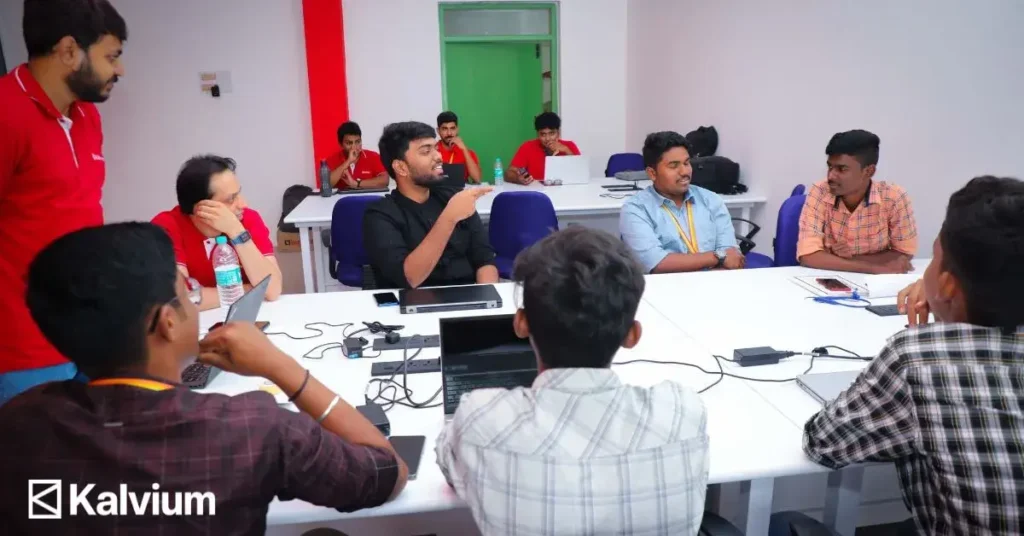
Most college freshmen spend orientation worried about making friends, finding the canteen, and surviving the first semester. Kalvium students? They’re fired up about learning, building, and becoming someone their future selves will be proud of.
That energy doesn’t come from nowhere. It comes from understanding, right from day one, what this program is really about.
What Clarity Looks Like After Orientation
By the end of your first week, you won’t just know your way around campus.
You’ll know what Kalvium expects from you, and what you should expect from yourself. You’ll understand that respect is earned, not given. That learning is your responsibility, not someone else’s job. That being uncomfortable is part of the process, not a sign you’re in the wrong place.
You’ll also know your batchmates better. You’ll have played games, shared stories, and laughed through awkward moments together. You’ll have started building the friendships that will carry you through late-night coding sessions, tough project deadlines, and everything else that’s coming.
And you’ll have one more thing: clarity.
Clarity about whether this is the kind of learning environment you want. Whether you’re ready to show up, struggle, and grow. Whether you’re here to become a better version of yourself or just get a degree.
Kalvium’s first week doesn’t hide what’s ahead. It shows you exactly what you’re signing up for, and it asks you to decide if you’re ready.
Most students leave orientation exhausted, energized, and more certain than ever that they made the right choice.
If that sounds like the kind of first week you want, you’re probably in the right place.
FAQ
Nervous About Orientation? Here’s What Students Actually Wonder
What should I expect during my first week at Kalvium?
Your first week is intensive and intentional. You’ll navigate campus, participate in structured conversations about peer pressure and decision-making, adapt to new communication norms like addressing everyone by first names, and engage with accountability systems. By the end, you’ll have clarity about whether this learning environment matches what you want, and you’ll have started building genuine friendships with your cohort. It’s demanding, but it’s designed to prepare you for transformation as a learner, not just how to attend classes.
Does Kalvium provide mentorship or guidance during the orientation period?
Yes. Mentors and faculty are present throughout orientation to guide you. However, the approach focuses on guidance rather than answers. You’ll get support and direction to help you figure things out yourself, which builds genuine capability. This is different from having someone do the work for you. Mentors help you develop problem-solving skills and understanding that you can actually apply to real projects.
How does Kalvium’s immersive learning approach start from day one?
Orientation itself is immersive. From the moment you arrive, you’re not just receiving information about policies. Instead, you’re having conversations that shift how you think about learning and yourself. You’re navigating unfamiliar environments. You’re experiencing accountability systems that emphasize your responsibility. You’re building a culture around respect, equity, and genuine growth. This intensity mirrors how professionals actually work, preparing you for the real-world engineering environment you’re entering.
Will I get a chance to meet and interact with peers during orientation?
Absolutely. Orientation is designed specifically for community building. You’ll participate in games, shared activities, and honest conversations with your cohort. You’ll share experiences, laugh through awkward moments together, and build trust through openness. These aren’t forced icebreakers. The relationships you form during that first week become the foundation for everything that follows, including late-night coding sessions and challenging projects a head.
What if I’m nervous about meeting new people during orientation?
Everyone is. Orientation is designed to break that nervousness early through games, group activities, and honest conversations. You’re not expected to be instantly comfortable. You’re just expected to show up and participate. The friendships build from there.
Do I need to prepare anything before orientation starts?
No. Just bring yourself, an open mind, and comfortable walking shoes (you’ll need them for that 600-acre campus). Everything else, conversations, activities, learning, happens during the week.
What if I’m not sure I can handle the “no spoon-feeding” approach?
That’s normal. Most students haven’t experienced that kind of learning before. But here’s the thing: you’re not thrown into the deep end on day one. You’re guided, supported, and challenged gradually. The first week helps you understand how to learn this way, and whether you’re willing to try.
Is orientation just for students, or do parents attend too?
Orientation is student-focused. Parents are welcome during drop-off, but the week itself is designed for students to start building independence and forming their own community.
What happens after orientation week?
Classes begin. Projects start. The real work kicks in. But by then, you’ll know what’s expected, who’s around you, and how to navigate the learning environment. Orientation isn’t just an introduction. It’s a foundation.